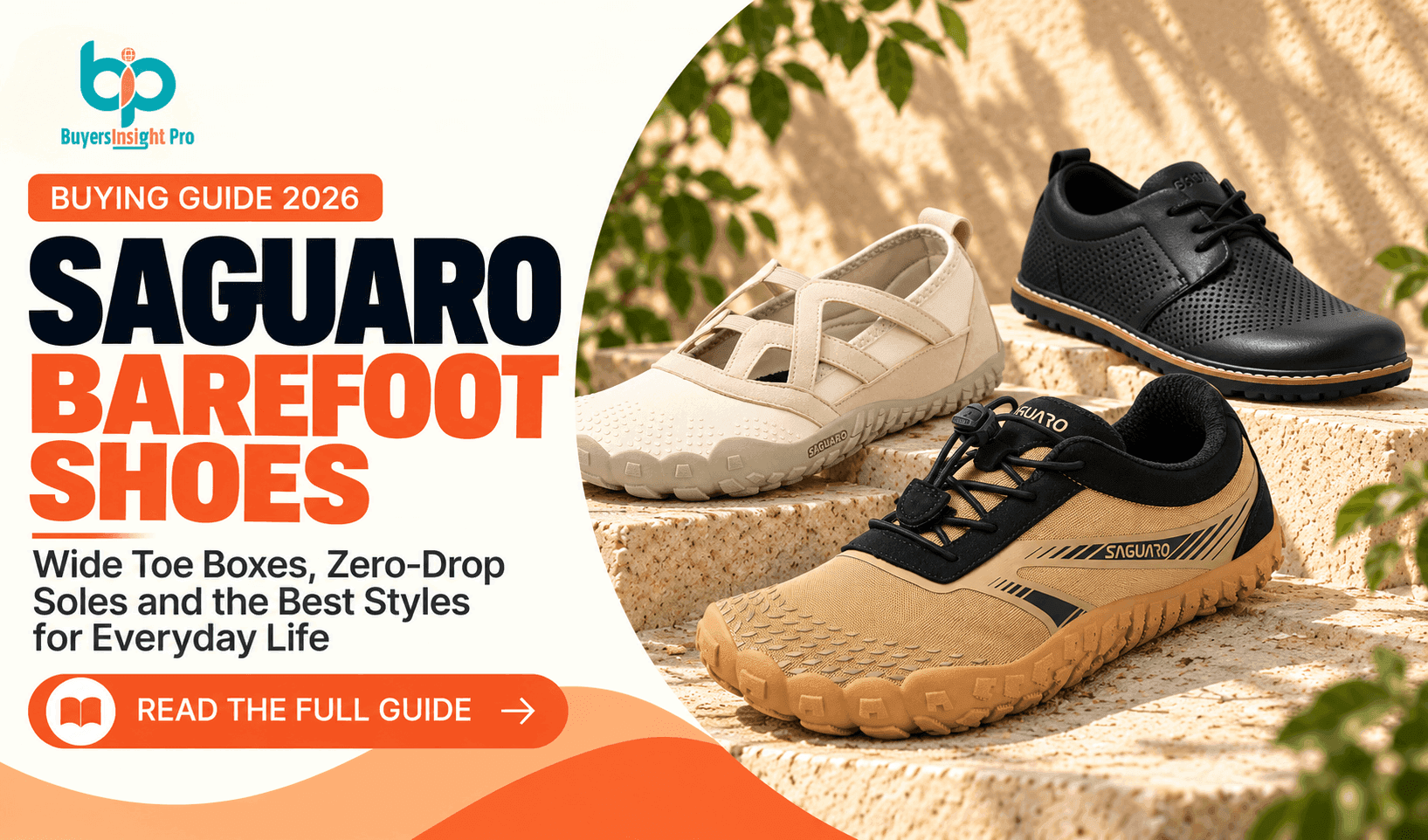
Most footwear shopping starts with color, style or a familiar brand name. Barefoot-shoe shopping begins somewhere more fundamental: how much room your toes have, how the sole bends and how your feet respond when a shoe stops doing so much of the work. SAGUARO has built its identity around lightweight minimalist footwear with foot-shaped designs, wide toe boxes and zero-drop soles, bringing these features to casual shoes, training styles, hiking options and children's footwear.
That makes SAGUARO appealing to curious beginners, but the language of barefoot shoes can be confusing. Does zero drop mean no cushioning? Is a wide toe box the same as a wide shoe? Will a flexible sole feel comfortable on concrete? And can you wear a minimalist hiking shoe on a rocky trail simply because the product page calls it trail-ready? These are the questions that matter before buying.
This guide explains what SAGUARO offers, how to compare its main styles and how to transition thoughtfully if you are accustomed to supportive or heavily cushioned footwear. It also looks at practical details such as measuring foot length, judging toe-box shape, matching outsole design to terrain, choosing shoes for children and understanding which models are actually intended for wet weather.
Product specifications and example prices come from the brand's published catalog, not from a claimed hands-on test. The shoe prices mentioned are in US dollars and can vary with color, size, discounts and destination. The aim is a realistic buying decision, not the suggestion that minimalist footwear is right for everyone.
Compare SAGUARO’s core barefoot range and check the exact size chart and outsole details before choosing.
Explore SAGUARO Shoes →What Makes SAGUARO Different From Conventional Shoes?
SAGUARO markets a barefoot feel rather than a traditional athletic-shoe experience. Its central design features are a wider, foot-shaped front, a flat heel-to-toe platform and flexible construction. Many conventional shoes raise the heel above the forefoot, build in substantial cushioning or use relatively stiff soles. A minimalist design reduces some of those structures, which can make the ground feel more noticeable underfoot.
The brand is not a single-purpose running label. Its online catalog includes casual shoes, training shoes, water shoes, hiking footwear, rain boots, dress-inspired styles and children's models. That breadth matters because barefoot construction alone does not tell you whether a shoe is appropriate for a gym floor, wet pavement or a long commute.
Price is another part of the appeal. Several listed shoes sit in a comparatively accessible range, while specialized boots and premium designs cost more. Affordability is useful for trying a new category, but fit and comfort should still determine whether a purchase is worthwhile.
Barefoot Shoes Explained: Zero Drop, Toe Space and Flexibility
Zero drop means that the shoe is designed without a raised heel relative to the forefoot. It does not mean that the sole is literally zero millimeters thick, nor does it automatically mean that a shoe has no insole or protective material. The thickness, tread and stiffness can vary substantially between models.
A wide toe box describes the shape and room at the front of the shoe. It gives toes more space to spread than a tapered fashion-shoe silhouette, but the rest of the shoe may still feel narrow around the midfoot or heel. A shopper with a high-volume foot, prominent instep or very broad midfoot needs to consider the whole upper, not only the toe area.
Flexibility is the third major distinction. A pliable sole can bend and twist more readily with foot movement. That may feel liberating on smooth surfaces, yet it also means less isolation from stones, uneven ground and repeated impact. For some wearers, that is the attraction; for others, it is precisely the reason to choose a more protective shoe.
These characteristics describe design, not a universal health outcome. Barefoot shoes do not automatically correct posture, cure foot pain or prevent injury. Their suitability depends on the person, the activity, current footwear habits and any existing medical or mobility concerns.
SAGUARO Shoe Categories: Which One Fits Your Routine?
The most effective way to shop is to choose a use case first. Everyday casual walking, functional training, trail hiking, children's school wear and wet-weather commuting place different demands on a shoe. A lightweight trainer can be enjoyable on a dry path but disappointing in a rainstorm; a waterproof boot may be useful outdoors but feel excessive in a warm gym.
The catalog has overlapping categories, so a product may appear in more than one collection. That is normal for versatile footwear, but shoppers should read each model's specifications rather than assume every 'barefoot' shoe has the same grip, upper material or level of protection.
Everyday Walking and Casual Shoes: Where Most Beginners Should Look
For someone new to minimalist footwear, an everyday walking style is a logical place to start. It lets you experience a flat platform and more toe space during shorter, familiar activities rather than introducing a radically different shoe on a demanding hike or workout.
SAGUARO's Motion I Pro is presented as an everyday movement shoe and is listed at $63.99. The Stroll I moc-toe casual shoe is listed at $71.99, offering a less athletic appearance for commuting and relaxed outings. These examples show that the brand is trying to move barefoot design beyond the look of a conventional running sneaker.
Choose based on where you will actually wear the shoe. For errands and city walks, consider how the sole feels on pavement and whether the upper is breathable enough for your climate. For office use, think about dress expectations and whether you need a darker, understated finish.
A casual model can be a sensible first purchase, but do not immediately replace every shoe in your wardrobe. Alternating with familiar footwear makes it easier to assess how your feet and calves respond.
SAGUARO Training Shoes: Stable Ground Feel Versus Cushioning
The Fast I Pro is listed at $63.99 and described for strength and functional training, including squats, deadlifts and cross-training. Its low-profile sole and grip-focused design may appeal to people who prefer direct floor contact rather than a thick, soft running-shoe platform.
Ground feel can be useful for some lifting activities, but gym requirements differ. A weightlifting shoe with an elevated heel and rigid base serves a different purpose, and a highly cushioned running shoe serves another. A minimalist trainer should not be assumed to replace every specialist athletic shoe.
The Ground model goes further into minimalist territory. The brand describes it as an ultra-thin design with a 2.8 mm sole, priced at $87.99, and specifically positions it for people already adapted to barefoot footwear. That distinction is important: the thinnest shoe is not necessarily the best beginner shoe.
Indoor training is a controlled way to assess grip and fit, but pay attention to the gym's rules and the demands of your routine. Fast lateral movement, heavy equipment and crowded spaces can require protection or stability characteristics that vary by model.
Hiking and Trail Shoes: Read the Outsole Before the Marketing
SAGUARO sells hiking-oriented minimalist shoes, including the Forestep I and Active II Pro. The Forestep I was listed at a discounted $40.99, while the Active II Pro was listed at $61.99 and described as having a 5 mm rubber sole, upgraded outsole and knit upper. Those are meaningful differences for someone comparing lightweight trail options.
A thin, flexible hiking shoe can offer mobility and a clear sense of terrain, but it also exposes the foot to more pressure from stones and roots than a thick-soled boot. Before buying, examine tread depth, toe protection, traction claims and the intended terrain. A dry woodland path is not the same environment as loose scree or a steep, wet descent.
The brand's hiking FAQ distinguishes its Brave waterproof models from other hiking styles that are not waterproof. That is a useful reminder that quick-drying construction and waterproof construction are not equivalent. A breathable shoe may recover quickly after getting wet without keeping your socks dry in the first place.
Beginners should keep early minimalist hikes short and predictable. If you already have ankle instability, neuropathy or another condition affecting sensation or balance, seek individualized advice before using thin-soled footwear on technical trails.
Waterproof Barefoot Shoes and Rain Boots: Understand the Labels
The waterproof collection includes the Brisk I barefoot rain boot, listed at $79.99, and the Rise IV winter boot, listed at $104.99. The Brisk is presented as a foldable, PVC-free rain boot with a wide toe box; the Rise IV emphasizes waterproof protection for cold and wet conditions.
Those products serve different needs from a breathable summer trainer. Rain boots are useful for muddy gardening and short wet-weather walks, while winter footwear adds considerations such as warmth, traction and room for socks. A shoe that works well in rain may still be inappropriate for ice, where outsole compound and traction are critical.
Water resistance is not an all-or-nothing property across the SAGUARO range. Some product listings use 'splash-proof' or 'static waterproof' terminology. Check whether the claim applies to the whole shoe, what testing conditions are described and whether seams, closures or shoe height limit protection.
Waterproof footwear also needs time to dry and air out. The right purchase depends on how frequently you encounter rain and whether you value breathability more than moisture protection.
SAGUARO Barefoot Shoes for Kids: Fit Matters More Than Hype
The brand has an extensive children's collection, including the Kid's Free I at $53.99, Kid's Smart I at $48.99, Kid's Vitality I at $48.99 and several school and rain-ready styles. It emphasizes wide toe boxes, flexible soles and lightweight materials for everyday play.
Children's shoes need to accommodate growth without becoming so loose that the heel slips or the child trips. A roomy toe box is useful only when the shoe also stays securely in place during running, jumping and playground activities. Adjustable straps and easy closures can make a practical difference for younger children.
Measure both feet, allow appropriate growth room and recheck the fit regularly. Children may not always explain discomfort clearly, so look for rubbing, reluctance to wear the shoes or changes in how they move. A minimalist label does not substitute for proper fit or adequate protection for the setting.
Parents should avoid treating barefoot shoes as a guaranteed developmental intervention. Comfort, flexibility and freedom of movement are legitimate shopping priorities, but claims about superior growth or injury prevention require more evidence than a product description.
Comparing SAGUARO Models by Activity and Price
These examples illustrate how varied the catalog has become. Prices are displayed in USD on the official site and are not a substitute for checking the final cart, regional availability or promotional changes.
Rather than selecting the cheapest or thinnest option automatically, compare the shoe's intended activity with your actual needs. For many first-time buyers, a comfortable casual shoe will be more useful than a specialist model.
| Model | Published price (USD) | Intended use / consideration |
|---|---|---|
| Forestep I | $40.99 sale | Versatile walking and light hiking |
| Active II Pro | $61.99 | Flexible light outdoor and training use |
| Motion I Pro | $63.99 | Everyday movement |
| Fast I Pro | $63.99 | Strength and functional training |
| Stroll I | $71.99 | Casual commuting and city walks |
| Ground | $87.99 | Ultra-thin 2.8 mm sole; experienced users |
| Kid's Free I | $53.99 | Children’s play and daily wear |
| Brisk I | $79.99 | Foldable barefoot rain boot |
| Rise IV | $104.99 | Waterproof winter boot |
How to Choose the Right Size and Toe-Box Width
Start by measuring your feet while standing, ideally later in the day when feet may be slightly larger. Measure both feet and use the longer measurement when checking the model-specific chart. Size conversions between EU, UK and US labels are convenient references, but actual internal shoe length and shape matter more.
Leave enough room ahead of the longest toe so it does not hit the front during walking, especially downhill. At the same time, the heel should not slide excessively, and the upper should not squeeze the instep. A wide toe box can feel unfamiliar if you are used to pointed or tapered footwear; unfamiliar does not necessarily mean incorrectly sized.
SAGUARO's online filters distinguish standard, wide and extra-wide options in some collections. That makes it worth checking each model rather than assuming all SAGUARO shoes share the same last. Foot shape varies, and a model that fits a broad forefoot may still be uncomfortable for a particularly wide midfoot.
Use the official size guide for the exact model and compare any published foot-length measurements. If you fall between sizes, think about sock thickness, intended use and the brand's current exchange policy before ordering.
Use SAGUARO’s official size guide and compare standard, wide and extra-wide options where offered.
Explore SAGUARO Shoes →How to Transition to Zero-Drop Shoes Without Overdoing It
Transition is one of the most important subjects missing from many shoe advertisements. If you have spent years in elevated-heel, cushioned shoes, a sudden move to flat, flexible soles can change the load experienced by your calves, Achilles tendons and feet. Even if the new shoes feel comfortable immediately, that does not mean your tissues have adapted to longer use.
Begin with short periods of ordinary walking on predictable surfaces. Increase time and activity gradually according to comfort rather than following a rigid universal schedule. Avoid making your first outing a long run, all-day city tour or challenging hike.
Temporary awareness of different muscles working is not the same as pain that should be ignored. If you experience persistent soreness, sharp pain, numbness or altered walking mechanics, reduce or stop use and seek professional guidance when appropriate. The goal is sustainable comfort, not proving that you can tolerate discomfort.
People with diabetes-related loss of sensation, significant foot deformities, active injuries or conditions requiring prescribed footwear should consult an appropriate healthcare professional before changing to minimal protection.
Are Barefoot Shoes Better for Foot Health?
The appeal of barefoot footwear is easy to understand: less toe compression, a flat platform and more freedom to flex can feel better for some wearers. Yet the evidence does not support a simple claim that every person will be healthier in minimalist shoes. Benefits and drawbacks vary by activity, adaptation and individual anatomy.
Minimalist shoes may alter gait mechanics and how forces are distributed. That can be helpful in one context and problematic in another. A person with comfortable feet in supportive footwear has no obligation to switch, while someone frustrated by narrow toe boxes may appreciate a different shape even without wanting an extremely thin sole.
Think of barefoot footwear as a design choice with tradeoffs. More sensory feedback can mean less protection. Greater flexibility can mean less structure. Zero drop can change loading patterns. Those tradeoffs deserve a deliberate decision rather than a one-size-fits-all health promise.
Materials, Breathability and Cleaning
SAGUARO's lineup uses different materials, including knit uppers, casual fabrics and weather-resistant boot constructions. Breathable mesh or knit may be pleasant in warm conditions, while protective uppers can be more useful for wet or cold settings. Material choice affects how quickly a shoe dries, how it holds its shape and how easy it is to clean.
At least some product pages, including Luck I, provide machine-washing guidance for selected shoes. That should not be generalized to every model. Follow the care instructions for your specific purchase, especially if it has glued overlays, leather-like materials or waterproof construction.
Routine care is simple: remove loose dirt, air out the shoes after use, clean gently as instructed and avoid prolonged heat exposure. Wet shoes should dry thoroughly before storage. Repeated machine washing or harsh cleaning chemicals may shorten the life of certain materials.
Value for Money: Is SAGUARO a Good First Barefoot Brand?
SAGUARO occupies an interesting position because it offers recognizable minimalist features across a relatively broad price range. Examples include the discounted Forestep I at $40.99, Motion I Pro at $63.99, Stroll I at $71.99 and specialist Rise IV winter boots at $104.99. That spread allows buyers to pay more when they genuinely need a particular material or feature.
The more important value question is whether the shoe fits and suits its purpose. An inexpensive barefoot trainer that causes heel slipping or lacks the grip you need is not a bargain. Equally, a premium ultra-thin shoe may be a poor purchase for someone who simply wants a roomy everyday sneaker.
Newcomers may get the most value from a versatile, moderate-use model before experimenting with extremely thin soles. Experienced minimalist-shoe wearers may care more about exact sole thickness, flexibility and ground feel.
Shipping, Returns and Ordering Considerations
SAGUARO's website offers shipping, size-guide and return/exchange information through its help links. The availability and delivery estimate shown on a product page can vary by warehouse and destination. For example, a product may display different estimated delivery windows for a US warehouse and an international warehouse.
Before paying, confirm the selected size, width, color, warehouse availability, shipping charge and applicable taxes. Read the current return or exchange conditions, especially whether the shoes must remain unworn and how return postage is handled. Do not assume a universal free-return policy.
Trying the shoes indoors on a clean surface is a practical way to check toe room, heel hold and comfort while preserving their condition if the policy permits a return. Keep the packaging and order details until you are confident the size is right.
SAGUARO Pros and Cons
SAGUARO's strongest advantage is the range of uses it covers without abandoning its minimalist identity. Its main limitation is the same tradeoff faced by barefoot footwear generally: the design may not provide the structure or protection every wearer needs.
| Advantages | Tradeoffs |
|---|---|
| Wide toe-box and foot-shaped options | Width and fit still vary by model |
| Zero-drop, flexible designs | Adaptation may be needed |
| Casual, training, hiking and kids’ ranges | Not all models are waterproof |
| Accessible prices on selected models | Minimal soles provide less underfoot protection |
| Specialist wet-weather and winter styles | Shipping and returns depend on destination and policy |
| Model-specific sizing information | Not ideal for every foot condition or activity |
Who Should Buy SAGUARO—and Who Should Consider Something Else?
SAGUARO is worth considering for shoppers who want a roomier toe area, are curious about zero-drop footwear or need a relatively accessible introduction to minimalist shoes. The brand is particularly interesting for people who want separate options for casual wear, training, hiking and children's everyday use.
It may be a poor fit for someone who needs a highly cushioned walking shoe, a rigid orthopedic structure, specialized safety footwear or substantial rock protection on demanding terrain. Even within SAGUARO's lineup, the Ground ultra-thin model is a more specialized choice than a general casual shoe.
The best match is not necessarily the model with the most barefoot sensation. It is the model that fits securely, feels comfortable during realistic use and provides enough protection for your environment.
Final Thoughts: Start With Fit, Then Choose the Barefoot Feel
SAGUARO makes minimalist footwear easier to explore by offering more than one type of shoe. A broad toe box, zero-drop design and flexible sole are useful features to understand, but they are not substitutes for measuring your feet, choosing the correct activity category and allowing time to adapt.
For most newcomers, the smartest purchase is a well-fitting everyday model used gradually. For experienced barefoot-shoe wearers, specialized training, hiking and ultra-thin options may offer the specific ground feel they prefer. Choose based on your feet and routine, not on the assumption that less cushioning is always better.
Frequently Asked Questions About SAGUARO Barefoot Shoes
What are SAGUARO barefoot shoes?
They are minimalist-style shoes emphasizing wide toe boxes, zero-drop soles and flexible construction across everyday, training and outdoor categories.
Are SAGUARO shoes zero drop?
The brand emphasizes zero-drop construction across its barefoot range, but shoppers should verify specifications for the exact model.
Do SAGUARO shoes have wide toe boxes?
Many are designed with roomy, foot-shaped fronts. Width categories vary by model, and toe-box space is not the same as overall shoe width.
Are SAGUARO shoes good for beginners?
A comfortable everyday model may be suitable for a gradual trial. Extremely thin or specialized shoes are less obvious starting points.
Can you run in SAGUARO barefoot shoes?
Some models are designed for running or training, but activity suitability and adaptation vary. Transition gradually and check the specific model.
Are SAGUARO shoes good for hiking?
The brand sells hiking-oriented styles. Choose based on outsole grip, protection, terrain and weather rather than the barefoot label alone.
Are all SAGUARO barefoot shoes waterproof?
No. Waterproof or rain-oriented options exist, but many standard shoes are not waterproof.
How do I choose my SAGUARO size?
Measure both feet while standing and compare the longer foot to the model-specific size chart, allowing appropriate toe room.
Are SAGUARO barefoot shoes suitable for children?
The brand offers children's models, but fit, secure fastening and protection for the activity are more important than the barefoot label.
Are barefoot shoes automatically better for foot health?
No. Their benefits and drawbacks depend on individual needs, activity, adaptation and any existing foot conditions.
Can SAGUARO shoes be machine washed?
Some product pages provide machine-washing guidance. Follow the care instructions for the exact model.
What is the best SAGUARO shoe to buy first?
For many first-time buyers, a comfortable everyday walking or casual style is a more sensible trial than the thinnest specialist model.
Browse casual, training, hiking and children’s models, then check fit and current availability before ordering.
Explore SAGUARO Shoes →